
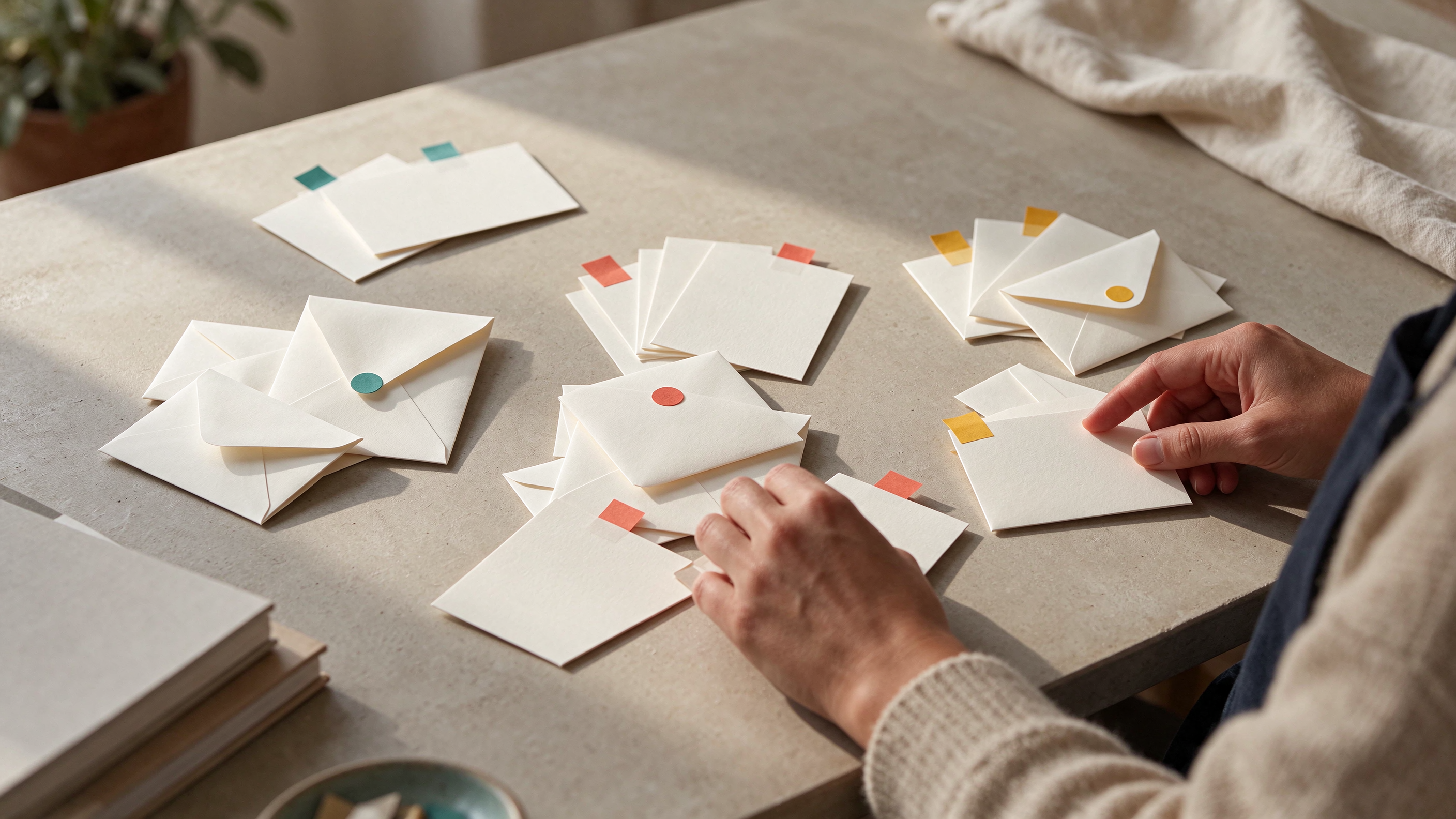
Sending one email to every contact can be simple, but it may not fit what every subscriber signed up to receive. Email marketing segmentation is the process of organising subscribers into groups that share a relevant characteristic, such as their stated interest, customer relationship, purchase history or recent engagement.
The purpose is not to collect as much personal information as possible. It is to use the information you lawfully hold to make a campaign more relevant, while respecting the subscriber’s expectations, consent and right to stop marketing messages.
For a small business, useful segmentation can begin with a few clear groups. You do not need a complicated model before you can make a sensible improvement.
What email marketing segmentation means
Segmentation separates an audience into groups so that a business can plan a message for each group. This differs from personalisation. Personalisation changes details within a message, such as a name. Segmentation changes who receives the message and why.
Common segment types include:
- Interest: the topic, service or product a person asked to hear about.
- Customer status: a prospect, current customer, former customer or enquiry that still needs a response.
- Lifecycle stage: a new subscriber, an active customer or someone who has not engaged recently.
- Behaviour: a meaningful action, such as requesting information or completing a purchase, where the business has a lawful and transparent basis to use that information.
- Location or service area: only where location is relevant to the offer and the use of the information is appropriate.
A segment should have a clear reason to exist. If the team cannot explain why a person belongs in a group and what message that group should receive, the segment may add complexity without adding value.
Why segmentation can improve campaign planning
A segmented campaign gives a business a clearer answer to three practical questions: who is receiving this email, why is it relevant to them, and what action should they take?
That clarity can help a team write a more focused subject line, choose a more useful example and avoid sending an offer to people for whom it is not intended. Mailchimp’s guide describes segmentation as grouping subscribers by criteria such as location, demographics or behaviour so that content can be more targeted.
These are planning and relevance benefits, not guarantees of opens, clicks, sales or inbox placement. Campaign results still depend on the offer, timing, message quality, technical setup, audience expectations and many other factors.
Five practical segments for a small business
1. Interest-based segments
Ask what the subscriber requested or showed interest in. A business offering website support, marketing and hosting could keep those interests separate rather than treating every contact as interested in every service.
Use the wording of the original sign-up or enquiry where possible. Avoid silently changing a person’s subscription from one subject to a much broader marketing list.
2. New subscribers
A new-subscriber group can receive a short introduction to the business, the type of content they should expect and where to manage their preferences. Keep the sequence consistent with the promise made at sign-up.
A welcome message is not permission to add unrelated promotions. The content and frequency should remain within the subscriber’s reasonable expectations and the applicable privacy rules.
3. Enquiries and prospects
An enquiry segment can help a business send useful follow-up information related to the request. Keep sales follow-up separate from general newsletter content when the recipient’s expectations differ.
Record the source and purpose of the enquiry. Do not assume that an enquiry for one service automatically authorises marketing for every service.
4. Customers and former customers
Customer status can help a business distinguish service updates from promotional messages. If a campaign promotes similar products or services to existing customers, check the conditions that apply and provide a clear opportunity to object.
Former customers need particular care. Their previous relationship does not automatically mean that every future marketing purpose is expected or permitted.
5. Engagement groups
You may separate contacts by recent meaningful engagement, such as recent clicks or a recent purchase, if your platform records that information and your privacy notice and lawful basis support the use.
An inactive group should not simply receive more and more messages. Consider a clear re-engagement message, a preference choice or suppression where the contact no longer wants marketing. A clean list is generally more useful than repeatedly mailing people who have withdrawn or objected.
A simple segmentation workflow
Start with the campaign, not the database. Write down the purpose of the email and the audience that would reasonably expect it.
Next, list the minimum information needed to identify that audience. A stated interest or customer status may be enough. Do not create sensitive or intrusive categories just because the software allows them.
Then check the source of each field. Was it provided by the subscriber, created from a business transaction, or inferred from behaviour? Confirm that the intended use is covered by the relevant notice, consent or other lawful basis. Keep a record of the segment rule so another team member can review it.
Before sending, apply exclusions. Remove unsubscribed contacts, people who objected, internal test addresses and contacts who should not receive the particular offer. Check the recipient count and sample the final audience.
Finally, review the campaign after sending. Look at the measures that match the campaign’s purpose, such as delivered messages, bounces, clicks, replies, unsubscribes or completed actions. Use the findings to improve the next campaign, not to promise a fixed outcome.
POPIA and email segmentation in South Africa
Segmentation does not remove the need for lawful direct marketing. The Information Regulator’s guidance identifies email as electronic communication and explains how section 69 of POPIA applies to unsolicited electronic direct marketing.
For a person who is not a customer, the Regulator’s guidance says the responsible party must obtain consent before sending unsolicited electronic direct marketing. If approaching someone for consent who has not previously withheld it, the guidance says to request consent in the prescribed or a substantially similar form and to approach the person only once for that request. It also says the responsible party carries the onus of proving consent.
Where a person is an existing customer, the guidance describes an exception with conditions: contact details must have been obtained in the context of a sale, and the marketing must concern the responsible party’s own similar products or services. The customer must have been given a reasonable, free and accessible opportunity to object when the details were collected and on each marketing communication. Silence should not be treated as consent.
Every direct-marketing communication must identify the sender or the person on whose behalf it was sent and provide an address or other contact details through which the recipient can ask for further communications to stop. A person who has consented can withdraw consent.
In practice, keep consent and preference records, document the source and purpose of each segment, suppress contacts who unsubscribe or object, and make the unsubscribe route easy to find. This article is practical marketing guidance, not legal advice. Ask a qualified privacy professional about a specific list, campaign or lawful basis.
Segmentation should support relevance, not pressure
Good segmentation helps a business send fewer irrelevant messages and give subscribers clearer choices. It should not be used to hide the sender, make consent unclear or increase the frequency beyond what people were told to expect.
Review segments regularly. Remove outdated tags, correct inaccurate customer status and document when a rule changes. If a segment cannot be explained to the person affected, it probably needs a closer privacy and usefulness review.
How Engage24 can help
Engage24’s Email Marketing service states that its email marketing work includes campaign strategy covering audience segmentation, send frequency and content themes. The page also describes branded mobile-responsive template design, copywriting, list management, automation and drip sequences, and performance reporting.
Those capabilities can support the planning and execution of segmented campaigns, subject to the agreed scope, the client’s data, the selected platform and applicable privacy requirements. Request an Email Marketing quote to discuss a campaign or list-management brief.
A short segmentation checklist
Before approving a segmented email campaign, ask:
- What is the campaign’s single purpose?
- Why is each recipient in this audience?
- What did each person agree or reasonably expect to receive?
- Are the segment fields accurate, necessary and appropriately sourced?
- Have unsubscribed, objecting and excluded contacts been suppressed?
- Does the email identify the sender and provide a clear stop-marketing route?
- Can the team explain what it will measure without promising a particular result?
If the answer to any question is unclear, pause the send and resolve the audience or compliance issue first. Segmentation is most useful when it makes the message more relevant without making the subscriber’s choices less clear.